Healthcare
The Vigilant Nurse: what hypervigilance costs after the shift
Why the body keeps scanning for danger hours after report is over, what that costs over a career, and regulation practices that fit inside a break.
Speaking & Workshops
My first degree was in community health education, and I've loved teaching for as long as I've loved learning. I lead hands-on workshops and tell stories from the stage about the trauma loop, the nervous system, and how patterns actually change, as a nurse who became the patient.
BSPH, BSN, RN · Certified Trauma Recovery Coach · Author of Addicted to Trauma
Why I do this
I teach because I want to give people tools they'll actually use in their everyday life: in the car, at their desk, in the middle of a hard conversation. A workbook they'll never open doesn't count.
I speak because I love storytelling, and data told as a story is the data people remember. Memory doesn't only live in the thinking brain, the body holds it too, and a story reaches both at once. That's how a room can forget a statistic by lunch and still be repeating a story on the drive home.
Teaching and storytelling are both creative work for me, and creating is part of how I heal. When I'm in front of a room, I'm doing my own work too.
The rooms I'm built for are carrying more than the job description said: the nurses who hold everyone else, the leaders who can't put the day down, and the founders who built a business on adrenaline and are starting to feel the bill.
A room that leaves with something to practice.
Signature talk
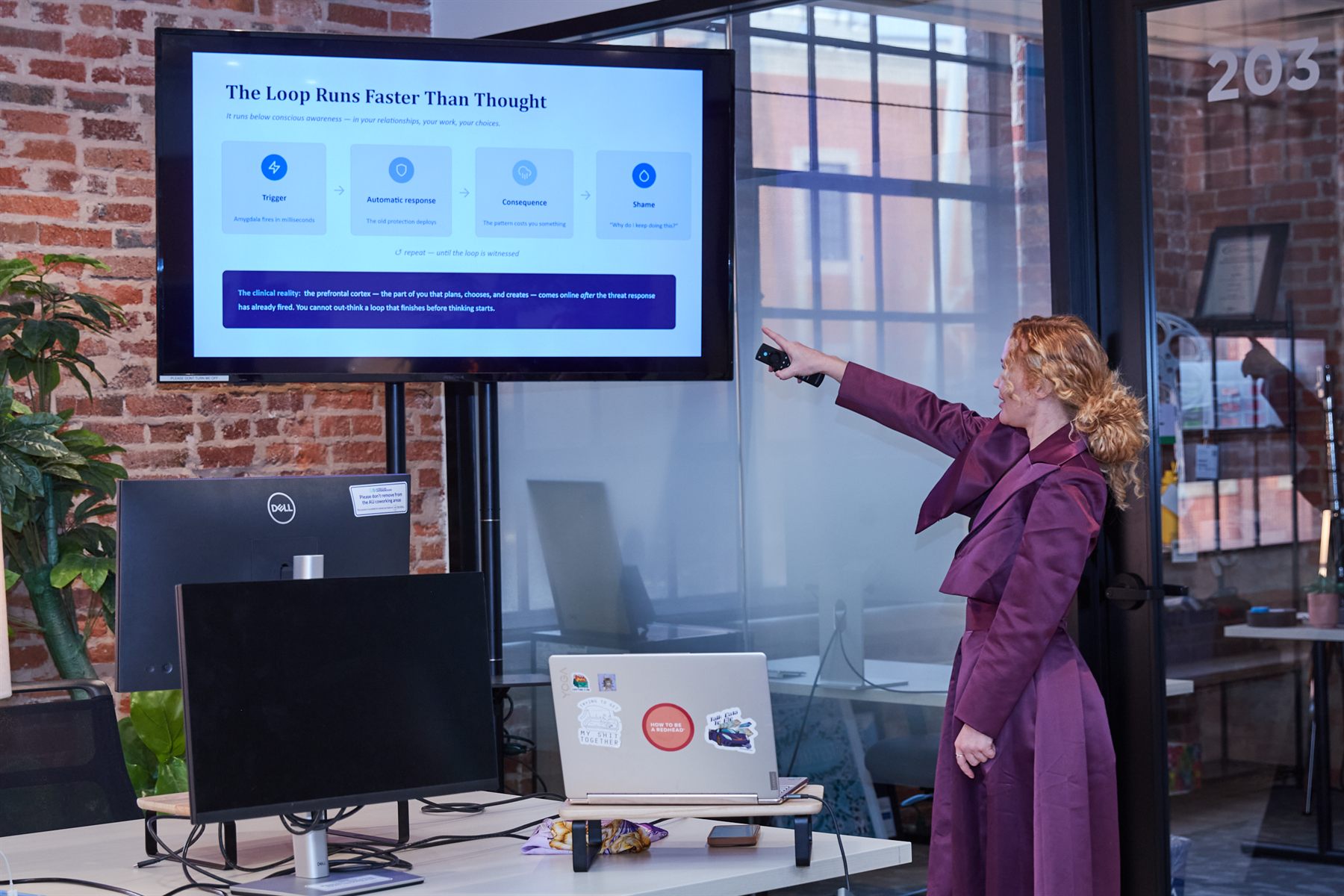
The trauma loop is a nervous system doing exactly what it learned to do: trigger, automatic response, consequence, shame, and back around again. I walk the room through it with the story of how I ran that loop myself, first as a nurse and then as the patient, and I pair it with the science of why understanding your pattern perfectly still doesn't stop it, since insight lives in the part of the brain that goes offline the moment the body decides it isn't safe. Then it gets practical. I teach the three moves of ARC (Awareness, Regulation, Creation) as things people can do before the day is over, so everyone leaves with a map and one practice they'll use at their desk.
Healthcare
Why the body keeps scanning for danger hours after report is over, what that costs over a career, and regulation practices that fit inside a break.
Entrepreneurs & leadership
How survival patterns become a business model, why the crash always comes, and what it takes to lead from a regulated nervous system instead.
Recovery & clinical
Addiction understood not as a moral failure but as a symptom of an unfelt wound, and what changes in treatment when both are worked at once.
“What I appreciated most was how openly Carrie shared her personal journey while also bringing her professional experience as a registered nurse and trauma informed coach. Her ability to connect lived experience with a deeper understanding of trauma made the conversation incredibly meaningful and relatable.”
 Conversation With Sarah LeeSeptember 2026
“An amazing guest with profound insight!”
 The Elisha Show: Purpose Driven Life & MasterySeptember 2026
“I had a wonderful conversation with Carrie. She was an amazing guest a pleasure to have her on my show.”
 Born Without a ChoiceSeptember 2026
“Thank you so much, Carrie Davidson, for coming on the show. It was genuinely amazing to speak with you.
You are an absolute inspiration. You have been through more than most people could ever imagine, and yet you speak about your experiences with such wisdom, dignity, knowledge and grace. There is something incredibly powerful about the way you understand yourself, your experiences and everything you have learned along the way.
The hardest thing to believe is that, after everything you have been through, you are still standing. But that in itself is an absolute testament to your strength, resilience and the person you have become.
I honestly cannot thank you enough for trusting me and my listeners with your story.
For any podcast host considering having Carrie on their show, my answer would be 100% yes. She is open, knowledgeable, engaging and incredibly easy to speak to. This was a conversation I will remember for a very long time.
Thank you profusely, Carrie.”
 AuDHD and Then SomeAugust 2026
“Carrie was an amazing guest! She is such a wonderful person and so incredibly respectful.”
 Gone in a BlinkAugust 2026
“I had an awesome conversation with Carrie :-)”
 The Thought Atlas PodcastJuly 2026
“Carrie Davidson is such a powerful and compassionate voice for trauma survivors! Her journey through CPTSD, addiction, and recovery is truly inspiring. She helps us understand that our survival responses kept us alive—but we don't have to stay stuck in them.”
 Empowered ConversationsJuly 2026
“I like her approach. She made the conversation enjoyable.”
 Health FactJuly 2026
“Carrie is amazing guest. She brings authentic experience and insights to a very challenging problem.”
 The Find Me PodcastJuly 2026
“An insightful and wonderful personality”
 The Everyday Health StruggleJune 2026
“It was a pleasure having Carrie on the show. She was very detailed in her responses and generously shared her experiences, making the conversation both insightful and impactful.”
 Human EnoughJune 2026
“Carrie is an incredible guest, I loved this amazing session with her
I highly recommend”
 Freedom UnlockedJune 2026
Outcomes
A shared language for the loop: trigger, automatic response, consequence, shame. Once a team can name it, they can talk about it.
One regulation practice they can do at their desk, in under two minutes, without anyone noticing.
The ARC map: Awareness, Regulation, Creation. Three moves, in order, on one page.
A way to talk about trauma without shame, at work and at home.
Permission to rest, which most rooms haven't been given in a long time.
Formats
When you want behavior to change and not just understanding, I'll recommend the workshop first.
Half day
The ARC map taught hands-on: small-group practice, worksheets, and a plan each person leaves with. The format that gets the most out of a room.
45 to 60 minutes
The signature talk or one of the others, with time for questions. Built for main stages and all-hands.
60 to 90 minutes
One topic, one practice, real questions. Fits a conference track or a lunch-and-learn.
Full day
Regulation for the whole team: the loop, the body, the pause, and how to keep it going after the retreat ends.
Remote, any length
The story behind the memoir, the nursing years, and the method, told plainly. No guru voice.
Every format above works virtually, with the same map and the same practice taught on a screen instead of in a room. I've taught this way plenty, and the pause works just as well through a laptop, so distance doesn't have to decide the format.

Audiences
For teams running on adrenaline and calling it culture. What the loop looks like at work, and how to build a pause into the day.
For the people who hold everyone else. Hypervigilance after the shift, moral injury, and practices that fit inside a break.
A keynote or breakout that gives a whole room a shared language for trauma and patterns, with a story they'll repeat on the drive home.
Trauma and addiction as one wound. Longer-form work with time for the body, the questions, and the quiet.
After the workshop
When I leave, the room still has the map. Not a memory of a slide, but a page each person filled in with their own trigger, their own automatic response, and one practice small enough to use at their desk before the next meeting starts.
The language stays too. Once a team has named the loop together, they can say “I'm in it” to each other in the hallway and be understood, which is a different workplace than the one they walked in from that morning.
Nothing in it needs to be filed away and opened later. It's small enough to reach for on an ordinary day, and those are the only tools that get used.

Booking
For workshops, keynotes, retreats, podcast interviews, and press, write to me at coaching@carriepdavidson.com. Include the event, the audience, the date, and the format you have in mind, and I'll get back to you within a few business days.
Media kit

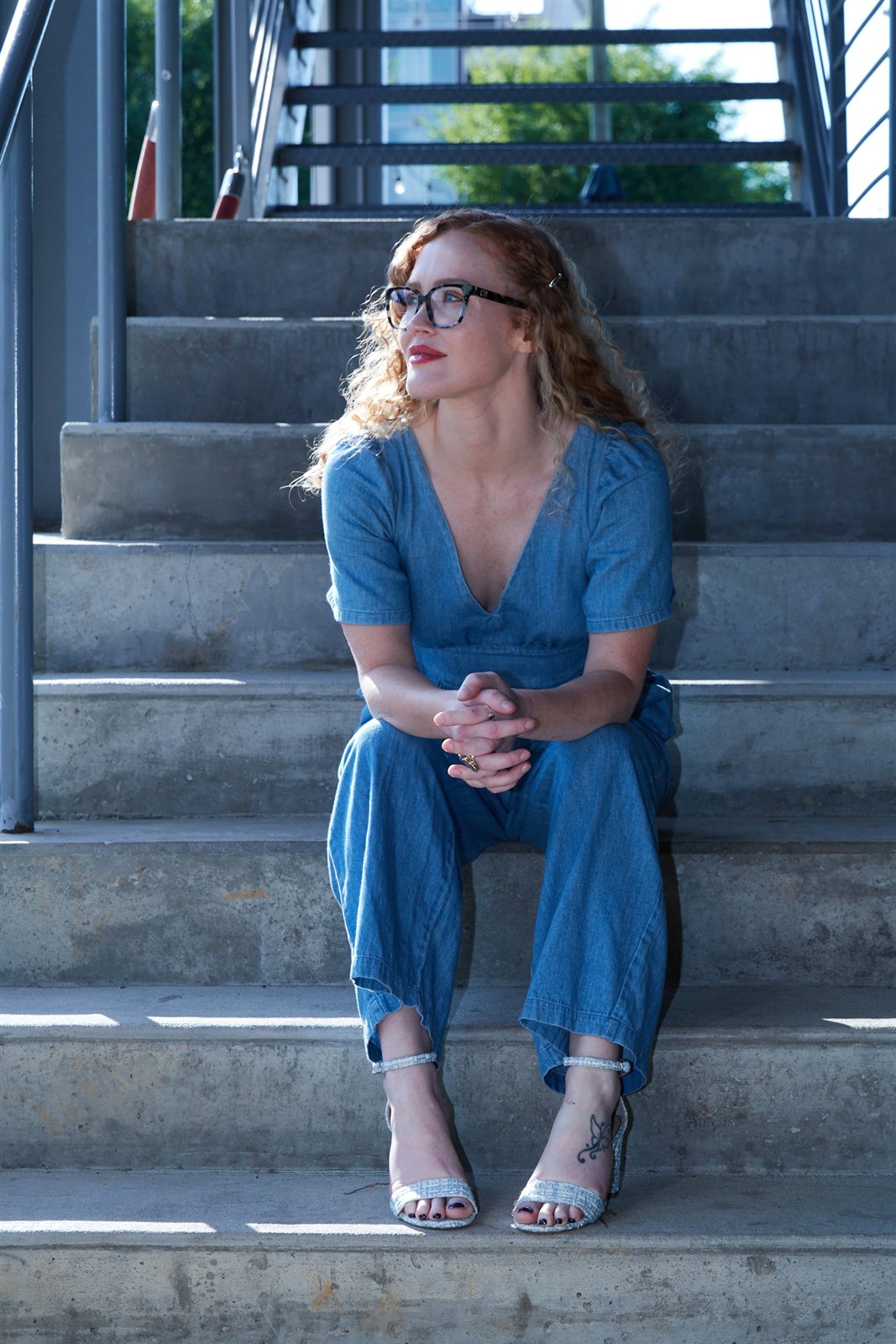
Portrait · 1067 × 1600
For programs, slides, and vertical layouts.

Wide · 2500 × 1317
For event pages, banners, and social cards.

Live · 1800 × 1200
Carrie teaching the trauma loop to a room.
Carrie Davidson, BSPH, BSN, RN, is a registered nurse, certified trauma recovery coach, and author of Addicted to Trauma. After five years in nursing, first as an emergency room nursing assistant and then in cardiology and oncology critical care, Carrie became the patient, and built the Conscious Creation Method (ARC: Awareness, Regulation, Creation) out of that recovery. Carrie's first degree, in community health education, is where the teaching started. Carrie hosts The Patterned to Purpose podcast, is featured in Women's Insider and USA News, and lives in Durham, North Carolina.
Carrie Davidson, RN, is the nurse who became the patient: a certified trauma recovery coach and author of Addicted to Trauma who teaches rooms how the trauma loop works and how it changes.
Carrie Davidson, BSPH, BSN, RN. Registered nurse, certified trauma recovery coach, author, host of The Patterned to Purpose podcast.
Conscious Coaching Collective, PLLC, is the trauma recovery coaching practice of Carrie Davidson, RN, based in Durham, North Carolina. The practice works at the overlap of complex trauma and addiction through the Conscious Creation Method (ARC: Awareness, Regulation, Creation), offered as one-to-one coaching, group programs, workshops, and a free monthly gathering. Carrie's memoir, Addicted to Trauma, is out now on Amazon.
The same story I tell in private, told into a microphone.
The podcast
My own show. I talk with people who built something real out of the exact circumstances that were supposed to sink them, and I tell the story behind the method without the highlight reel.
Appearances

Podcast
I tell the story at the center of the memoir: the kidnapping, the road through trauma and addiction, and the work of recovery. Episode 23, on Apple Podcasts.
Television
A featured television conversation with Inside Success TV about recovery and the story behind the memoir. Air date to come.

A profile on the work: nursing, recovery, and the Conscious Creation Method.

On the practice: the method, the nursing background, and the work itself.
As featured in



Next step
That's enough to start, and I'll come back with the format that fits and what it would take to make it land.
Common questions
My signature talk is You Are Not Broken. You Are Patterned.: the trauma loop explained through the nervous system, why insight alone doesn't change behavior, and the three moves of ARC a room can use the same day. My other talks cover hypervigilance after the shift for healthcare staff, building a business without running on adrenaline for founders and leaders, and trauma and addiction as one wound in two languages for recovery and clinical audiences.
A keynote of 45 to 60 minutes, a half-day workshop, a breakout session of 60 to 90 minutes, a full-day staff retreat, or a podcast interview, in person or virtual. I'm based in Durham, North Carolina. When you want behavior to change and not just understanding, I'll recommend the workshop first.
Write to me at coaching@carriepdavidson.com with the event or show, the audience, the date, and the format you have in mind, and I'll get back to you within a few business days. The media kit on this page holds downloadable headshots, a short bio, a one-line bio, and the boilerplate, ready to send to a producer or program chair.
I've been on both sides of the chart. Five years in nursing, first as a nursing assistant in the emergency room and then as a registered nurse in cardiology and oncology critical care, and then the patient who woke up in a psychiatric hospital unable to remember my own name. My talks come from lived recovery, grounded in clinical training and a method built from it, and every room leaves with something to practice.
Free, three minutes
Fight, flight, freeze, or fawn. Take the quiz and get your result, plus the first step that fits it, by email.
Take the 3-minute quiz